After Discharge: How Preterm Infants Parents Network Uganda Uses Digital Follow-Up to Keep Preterm Babies Connected to Care
For parents of a preterm baby, discharge day can bring two very different emotions.
There is relief that their baby is finally going home. But there is also the uncertainty that comes with caring for a baby who still needs close attention.
Will the baby feed well? Is the weight increasing? Is the breathing normal? What happens if something suddenly changes?
At PIPNU, we believe leaving the hospital should never mean being left behind.
That is why we use digital follow-up to help keep preterm babies connected to care after discharge.
Eight visits to help keep babies from falling through the cracks
Every discharged baby enrolled in the programme is scheduled for 8 mandatory home visits.
These visits provide an important link between the hospital and the family home. Community teams follow a structured checklist during each visit, helping ensure that important aspects of the baby's wellbeing are not overlooked.
The team can follow up on areas such as feeding, weight gain, breathing, development and other concerns that may arise as the baby grows.
Instead of relying only on memory or informal follow-up, the digital system provides a clear structure for each visit.
Turning information into action
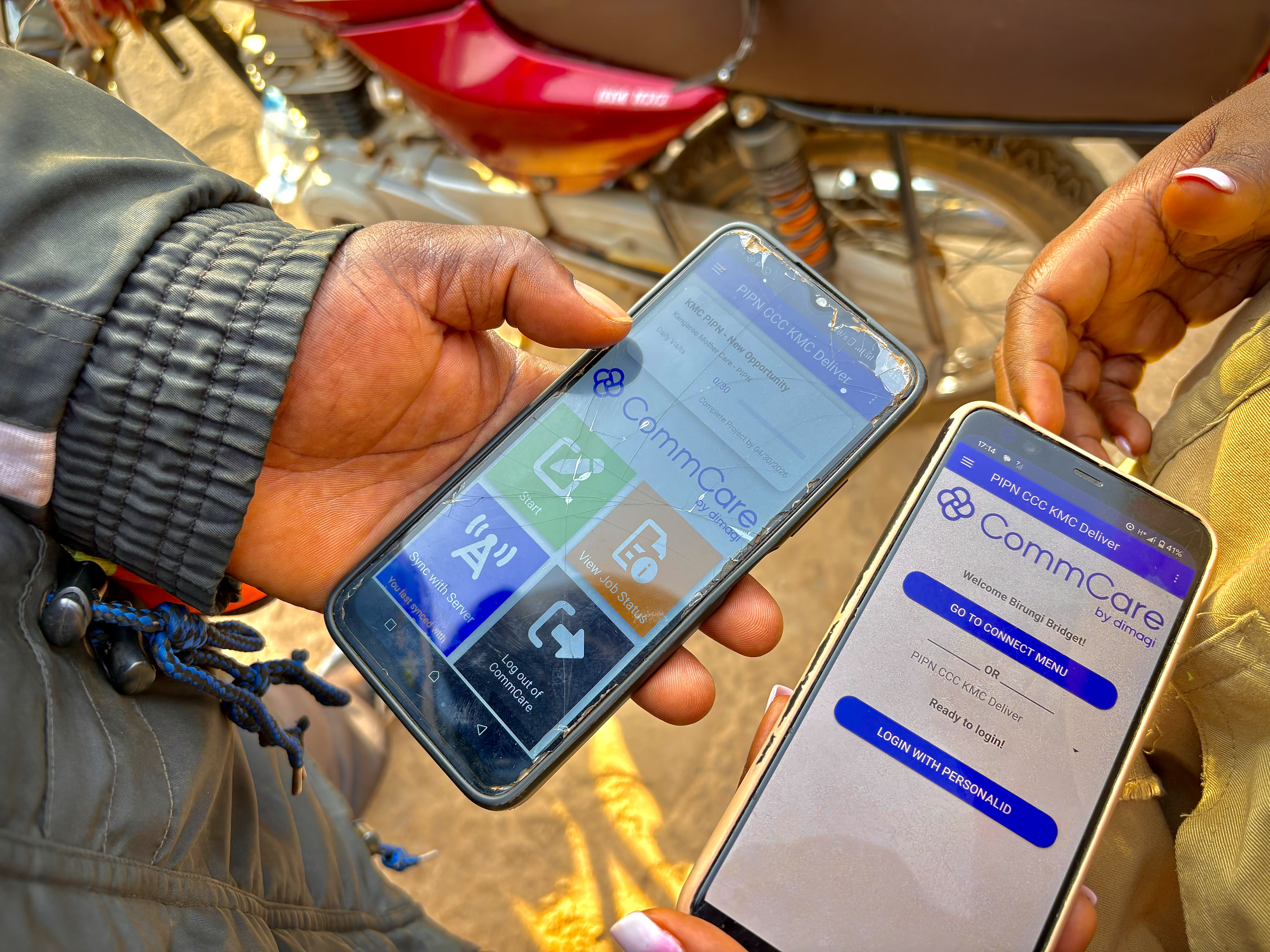
The system is powered through CommCare, a digital platform that supports PIPNU's community follow-up work.
During home visits, information is recorded directly into the system, allowing the team to maintain a consistent record of each baby's follow-up.
This means that a community health worker is not simply asking a parent, "How is the baby doing?"
They have a structured process that helps them look more closely at the baby's progress and identify concerns that may require further attention.
When a concern is identified, the family can be guided towards the appropriate health facility or support.
Because follow-up is about more than data
Behind every entry in the system is a real baby.
A baby who was born too early.
A parent learning how to care for a child who may still be fragile.
A family trying to recognise the difference between something that is normal and something that requires urgent medical attention.
The technology matters because it helps PIPNU organise and strengthen follow-up. But the purpose is deeply human — to make sure families are not forgotten once they leave the hospital.
Closing the gap between hospital and home
For many preterm babies, the weeks and months after discharge can determine how well they grow, develop and recover.
By combining community-based follow-up with digital technology, PIPNU is working to create continuity of care beyond the hospital walls.
Because a discharge form should not be the last time a health system checks on a preterm baby.
The journey continues at home.
And through structured follow-up, PIPNU is working to make sure no preterm baby falls through the cracks.
← Back to All Blogs