Putting Parents at the Centre: Strengthening Uganda's NICU Orientation Guide
For a parent entering a Neonatal Intensive Care Unit for the first time, everything can feel unfamiliar.
The equipment. The alarms. The medical language. The tiny baby surrounded by tubes and monitors.
In those first moments, parents can easily feel like visitors in their own baby's care.
But parents are not visitors.
They are an important part of their baby's care team.
That is why strengthening how parents and caregivers are introduced to the NICU matters.
Helping parents understand the NICU
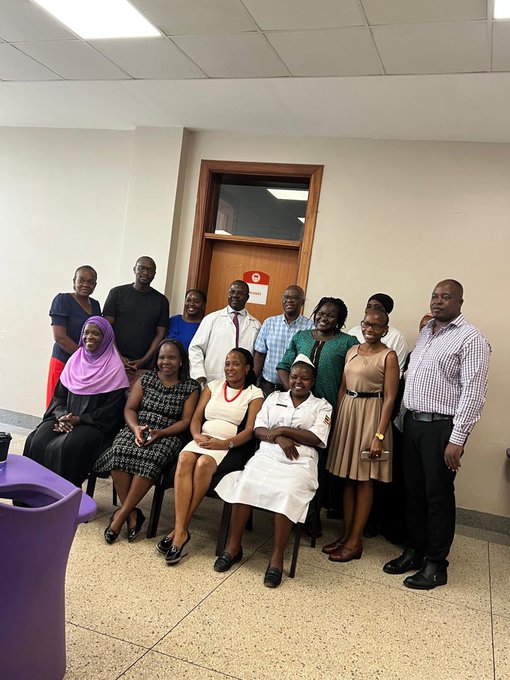
PIPNU recently joined key stakeholders at the Mulago Specialized Women's and Neonatal Hospital Skills Lab for a review meeting on the draft NICU Orientation Guide.
The meeting brought together different perspectives to review the guide and identify areas that could make it more useful, practical and family-centred.
For PIPNU, this work reflects an important principle: parents should not simply be told what happens to their babies. They should be supported to understand their baby's care and know how they can participate.
A well-designed orientation can help parents understand what to expect when they enter the NICU, how they can interact with their baby and healthcare team, and how they can contribute to their baby's care throughout the hospital stay.
From fear to participation
For families of preterm babies, knowledge can make an enormous difference.
A parent who understands why Kangaroo Care matters is better positioned to participate.
A parent who knows what feeding support looks like can ask informed questions.
A parent who understands the signs healthcare workers are monitoring can become more confident in recognising concerns.
And a parent who feels welcomed into the care environment is more likely to see themselves as an active partner rather than someone standing on the sidelines.
Why family-centred care matters
PIPNU's involvement in reviewing the guide is part of a broader commitment to family-centred neonatal care.
The organisation works with parents and healthcare providers to strengthen the connection between families and the health system — from the NICU to discharge and eventually back into the community.
The goal is not simply to improve a document.
It is to help create a better experience for families at one of the most frightening moments of their lives.
Because when a baby is fighting to survive, parents should not have to fight to understand how they can help.
They deserve clear information.
They deserve to be heard.
And they deserve to be recognised as part of their baby's care.
By contributing parent-centred perspectives to the NICU Orientation Guide, PIPNU is helping move neonatal care towards a model where families are not just present in the NICU, but are supported as partners in care.
← Back to All Blogs